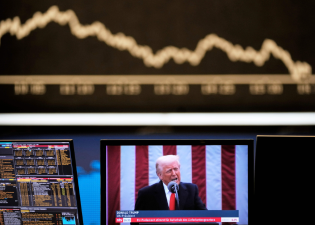
Despite the unpredictable trade war, critical mineral shortages, and tensions between the US and China, the global economy has been tossed around like a ball, demonstrating resilience beyond expectations. However, now is not the time to relax. The economic vortex shows no signs of abating. “We are experiencing an extremely turbulent era,” global markets are revealing future trends through three core signals: differentiation is replacing globalization as the new rule, AI and policy stimulus are dominating asset pricing, and supply chain security takes precedence over efficiency. These signals all point to one conclusion: traditional linear thinking is no longer effective, and investors and businesses need to develop survival strategies for a non-linear world.
What is a Global Market?
A global market refers to the exchange of goods, services, and labor between global markets that are not restricted by international borders.
For some companies, a global market means most markets worldwide. For example, tech giant Apple provides services in more than 175 countries. However, smaller companies, such as regional airlines, only provide services in specific regions of the global market. Through global expansion, businesses enjoy a range of benefits that they would otherwise not be able to obtain domestically.
Benefits of Participating in Global Markets
The most well-known benefits of participating in global markets are increased market share and increased profits. However, global expansion also helps companies thrive during periods of economic uncertainty, diversifying their workforce, leveraging innovative solutions, and reducing operational costs.
What are the characteristics of the global market?
Globalization:
The global market is a global market where the development of each country impacts others, and relationships between them are closely interdependent.
Intense Competition:
The global market has numerous participants, leading to fierce competition. Only companies with core competencies can survive.
Market Diversification:
The global market targets a broad range of consumers with diverse needs, requiring companies to continuously innovate and develop to meet these diverse demands.
Rapid Development:
With rapid technological advancements and the facilitation of international trade, the global market is developing rapidly, and companies must be vigilant about these changes.
The Impact of the Global Market on Businesses
The emergence of the global market means that competition between companies is no longer confined to their domestic markets but extends globally. Companies must adopt a global mindset and strategy to enhance their competitiveness and capture a larger market share.
Opportunities:
The global market presents businesses with more opportunities. Companies can leverage international resources and information to continuously expand their businesses and achieve rapid development.
Challenges:
The global market is highly competitive and rapidly changing, demanding greater innovation and pioneering spirit from companies. Facing a complex market environment, companies need to maintain strong responsiveness and adaptability.
Mindset Shift:
Companies need to adopt a global mindset and international strategy, strengthen communication and cooperation with companies in other countries, and improve their capabilities in areas such as corporate culture and cross-cultural communication.

What does the global market allow?
Diversification
Entering the global market allows businesses to establish operations in emerging and developing global markets, meaning access to new resources, including new talent. This includes rapid growth, more sales opportunities, and new career opportunities for overseas workers.
From SMEs and startups to large corporations, entering the global market helps your global business think beyond the consumers of a single market. It also makes it easier to target relevant customers in different countries and regions.
Economic Stability
Climate change, political conflicts, and other factors can subtly impact a country's economy. By entering the global market, businesses can better position themselves to weather waves of economic turmoil, even during recessions.
Hiring New Employees, Regardless of Location
Competition for top designers, marketers, engineers, and data scientists has never been fiercer. Every organization is unique and has different needs. By entering the global market, you can find talent with niche skills abroad.